If you're a ComEd customer in northern Illinois, you're now paying roughly 17 cents per kilowatt-hour, up about 47% since January 2025. If you're on Ameren in central or southern Illinois, you're around 15.5 cents, up roughly 94% since 2021. And June 1 brought another notch up: Ameren's supply rate jumped from 8.769 cents to about 11 cents per kilowatt-hour, with ComEd customers facing similar pressure.
Why are these rate increases happening? Is it because homeowners are suddenly using far more power than they used to?
Homeowners didn’t cause this. Here’s what did.
A power auction most people have never heard of
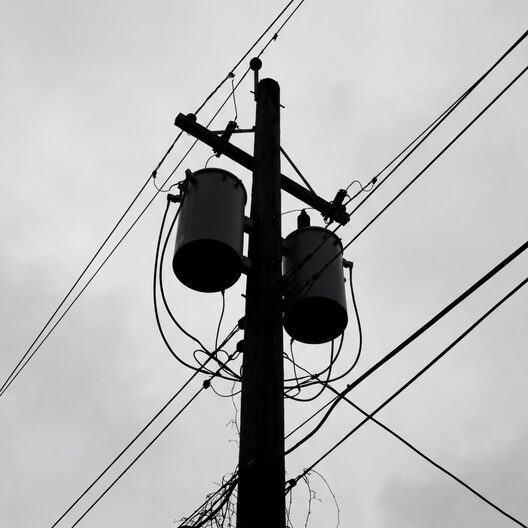
Electricity in Illinois doesn't just appear. Behind your monthly bill is a grid operator called PJM Interconnection, which runs an annual "capacity auction," essentially a forward market where power plants and other energy resources bid to guarantee they'll be available to produce electricity in the coming year. Utilities buy that reserved capacity, and pass the cost to customers. Most of the time, this process is invisible. The auction occurs, and customers just get a bill, slightly higher than before.
For years, the auction prices were relatively stable and relatively low. Then the math changed.
In the 2024-2025 auction, the clearing price was $28.92 per megawatt-day. In the most recent auction, covering 2026-2027, that price hit $329.17 per megawatt-day. That is a 1,038% increase in two years. The costs from that auction are now flowing through to your bill.
Why the price jumped 1,038%
The short answer: demand went up faster than supply.
PJM's Independent Market Monitor, the watchdog that tracks how the market operates, concluded that data centers were responsible for 70% of the capacity cost increase, accounting for $9.3 billion of the total jump. Northern Illinois alone already has more than 80 data centers operating, with an additional 75 large commercial projects proposed. These facilities run continuously and consume enormous amounts of power. A single large hyperscale data center can use as much electricity as a mid-size city.
The surge in artificial intelligence infrastructure is compounding this. AI workloads require far more computing power than traditional software, and computing power runs on electricity. Every new AI data center built in the Chicago area adds to the demand PJM must procure capacity for. It's a structural shift, not a temporary spike.
The supply side has been slow to respond. Building a new power plant takes years. The interconnection queue, where generators wait to connect to the grid, is chronically backlogged. The result is a widening gap between what the grid needs and what it has, and that gap is being priced into your bill every month.
The Illinois context
Illinois sits right at the crossroads of this energy story. Northern Illinois (ComEd territory) is in PJM, one of the largest grid operators in the country, covering 65 million people across 13 states and the District of Columbia. Central and southern Illinois (Ameren territory) is in MISO, a neighboring grid with its own capacity market dynamics. Both have been hit by rising costs, though the PJM capacity price spike has been the more dramatic driver.
The Citizens Utility Board, which advocates for Illinois utility customers, projects that the average Illinois household could see monthly electricity bills rise by up to $70 – or $840 annually – within the next few years if data center demand continues without significant new generation coming online. That's on top of increases that have already happened.
Illinois residential electricity rates were roughly eight to nine cents per kilowatt-hour in 2020. They are now 15 to 17 cents. That's a near-doubling of the cost of the same electricity, in roughly five years.
When does this get better?
The 2026-2027 PJM auction cleared 2,669 megawatts of new generation, the first increase in new capacity in four straight auctions. That's a meaningful signal that new supply is starting to come online. The Illinois Power Agency also has a storage procurement event scheduled for August 2026, targeting 1,038 megawatts of battery storage, which could help manage peak demand.
But data center demand keeps growing as new supply tries to catch up. PJM projects continued significant load growth for the next two decades. Some analysts estimate data centers alone could require 50 gigawatts of peak capacity by 2030, enough to power more than 20 million households. New capacity is coming, but it's running behind demand.
Prices may eventually moderate as more power comes online. The trajectory won't climb forever. But relief will not be instant. It will take years to restore equilibrium between supply and demand.
What homeowners can actually do
The most reliable way to insulate yourself from capacity auction prices is to reduce how much electricity you're buying from the grid. Specifically: generate some of it yourself.
Solar panels change your relationship with PJM's capacity market in a simple way. When your panels are producing, you're not drawing from the grid. The electricity you generate at home carries no capacity charges, no transmission costs, and no exposure to the outcome of next year's auction. It costs what it costs to install, and then it produces for you.
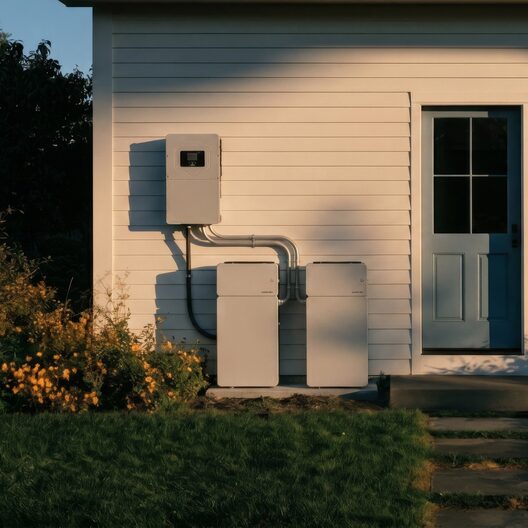
Pair solar with a home battery, and you gain more control still. You can store excess power during the day and use it during peak hours, exactly when grid demand is highest and prices most elevated. A battery also means that when the grid goes down (and grid reliability in the PJM territory has been under increasing strain), your home keeps running.
This is a real strategy that can be deployed in a matter of weeks, not years. It's why more Illinois homeowners are actively shopping for solar and storage rather than simply accepting another year of higher bills.
The PJM capacity auction problem is structural and it won't resolve quickly. Understanding what created it is the first step toward deciding you don't have to be entirely subject to it.
Brand Director at Daylight. Sunnyside is Daylight’s guide to energy, the grid, and the weather that moves your bill.