You've probably noticed it before: the lights dim slightly, the AC sounds like it's working harder, the ceiling fan slows. Nothing goes dark. The power doesn’t go out. But something is clearly off.
That's a brownout. And in summer, as heat builds and air conditioners run at full tilt, they happen more often than most people realize.
What a brownout actually is
A blackout is a complete loss of power. A brownout is a drop in voltage without a full outage. Your electricity stays on, but the voltage delivered to your home falls below normal levels, usually somewhere between 80% and 95% of its standard value.
That drop can be intentional or accidental. Utilities sometimes deliberately reduce voltage across a service area during periods of extreme demand, a controlled measure designed to keep the grid from collapsing entirely. Accidental brownouts happen when demand exceeds what the local grid infrastructure can handle, when equipment overheats, or when transmission lines lose capacity under thermal stress.
Either way, the result in your home is the same: appliances running on less power than they were designed to use.
Why brownouts are dangerous for your appliances
Here’s something most people don’t know: Brownouts can cause more lasting damage to your home than a full-on power outage.
When voltage drops, the motor inside your refrigerator, air conditioner, washing machine, or dishwasher works harder to maintain its speed, drawing more current to make up the deficit. That extra current generates heat. Over time, it degrades insulation, burns out windings, and shortens the lifespan of equipment.
Electronics behave differently but are equally at risk. Computers, smart devices, and anything with a sensitive power supply can receive erratic signals during a brownout, leading to data corruption, unexpected shutdowns, or hardware failure. When full voltage is restored, the resulting spike can damage components that survived the dip itself.
Medical devices that depend on stable power, such as home oxygen concentrators, CPAP machines, or insulin refrigerators, face obvious consequences if voltage fluctuates without warning. A brownout is a slow, quiet stress on everything in your home, potentially for hours, that you may not notice until something fails.
Why summer is peak brownout season
The underlying driver is air conditioning. On a hot summer afternoon, millions of households and businesses across the same grid region crank their AC simultaneously. Electricity demand spikes sharply, usually hitting its daily peak between roughly 3 p.m. and 8 p.m., when ambient temperatures are highest and people are returning home.
During a prolonged heat wave, that daily demand spike comes back day after day without the overnight temperature relief that normally lets the system recover. Demand stays elevated for nights and weekends rather than dropping off, and reserve margins, the spare capacity grid operators keep available for surprises, start to look thinner than the forecasts assumed.
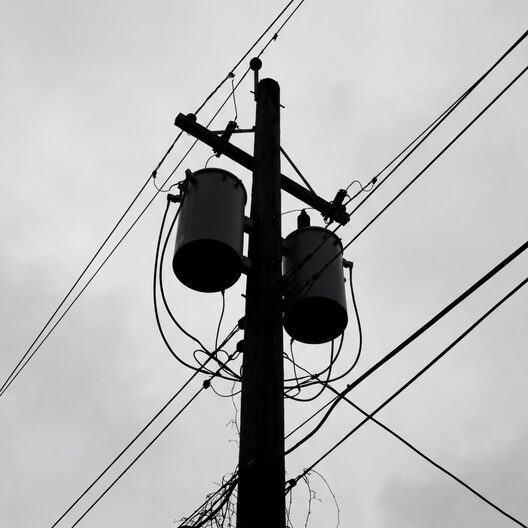
Heat also stresses the grid's own infrastructure. Transmission lines lose efficiency and sag as they warm. Transformers overheat. Substations that run cool in October run near their limits in July. The same weather event that drives people indoors to run their air conditioners is simultaneously reducing the capacity of the equipment that delivers the power.
This is the summer grid problem in its simplest form: more demand, less ability to deliver it.
The layer the weather story misses
Heat waves have always stressed the grid. What's changed is the starting point.
Federal forecasters project that electricity consumption in summer 2026 will be higher than in any of the previous five summers. Data centers now account for roughly half of all new U.S. electricity demand growth, and those facilities run at full load year-round, including during heat waves. They don't cycle off when temperatures spike. They don't reduce consumption to protect the grid. They simply add to the baseline demand that the system must serve before the first air conditioner turns on.
PJM, which operates the grid serving northern Illinois, was granted a rare emergency order by the U.S. Department of Energy in May 2026, authorizing it to curtail large loads, including data centers, during dangerous heat conditions. It's a signal about the pressure the grid is under before summer has even begun.
For context: over the course of summer 2025, MISO, the grid operator for central and southern Illinois, issued grid stress alerts on more than 40 of the 69 days between mid-June and late August. These were not outages. They were warnings that the system was running with less margin than comfortable, and that a heat spike could push it over the edge.
ISO New England, the grid operator for Massachusetts, carried an elevated risk designation from NERC, the national reliability watchdog, heading into summer 2026. Elevated risk means that under typical conditions the system should be fine, but a worse-than-forecast heat wave, an unexpected plant outage, or lower-than-predicted wind or solar output could create conditions where demand outpaces supply.
The grid is managing, but with less cushion than a decade ago, and with more demand pulling on it from more directions.
What happens during a heat-wave brownout in your home
The sequence usually starts in the late afternoon. Temperatures peak, air conditioners across the region switch from cycling on and off to running continuously, and demand climbs past what the grid's local distribution equipment was designed to serve at full voltage.
You notice the lights dim. The AC works audibly harder but cools the house less. Clocks on appliances may slow or reset. Older electronics may shut down unexpectedly.
If the voltage drop is severe or prolonged, the heat generated by straining motors can cause permanent damage. A refrigerator compressor that runs hot for three hours during a brownout may fail in the fall. A sump pump motor that compensated through a heat wave may not start when it's needed most.
What protects you
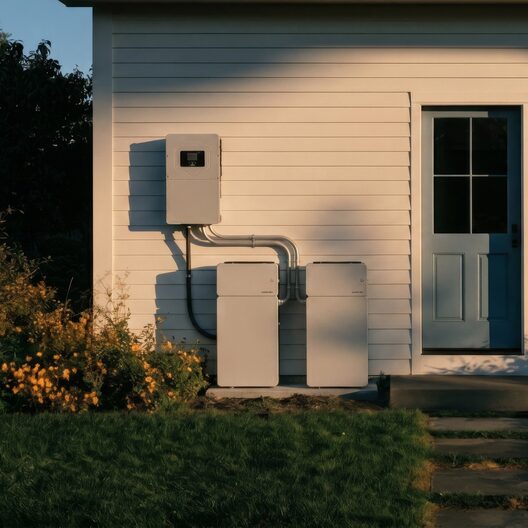
The most direct protection against brownout damage is a battery backup system that keeps your home's critical loads running at stable voltage regardless of what's happening on the grid.
A battery can supply your home with clean, consistent power during a brownout, shielding motors and electronics from the voltage fluctuations that cause wear and damage. If the brownout escalates to a full outage, the battery transitions seamlessly, with no gap in power to your home.
Solar panels add a second layer. The hours when brownouts are most likely, the late afternoon peak, are also among the hours of highest solar production. A home with solar and battery storage is generating and storing its own power precisely when the grid is most stressed. Rather than drawing from a system that's struggling to maintain voltage, you're running on power you made yourself.
The grid will have hot summers. It will have heat waves that push demand past comfortable margins. Brownouts have been a seasonal fact of life in New England and the Midwest for decades, and the combination of growing load and aging infrastructure means they will remain one. Building your own buffer is more reliable than hoping the grid holds.
Systems Architect at Daylight. Sunnyside is Daylight’s guide to energy, the grid, and the weather that moves your bill.