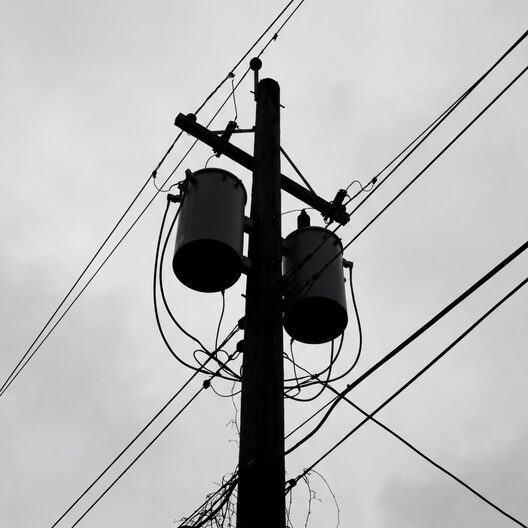
The founding Americans had no electricity, and this Fourth of July, many Americans found themselves in a similar position.
More than one million utility customers lost power over the Independence Day holiday weekend, marking the largest single-event outage across the Eastern United States in years. As of this Monday morning, more than 500,000 Americans were still without power.
The cause was a combination of blistering heat and battering storms. But the sweeping blackouts and all that came with them, including a reported 25 heat-related deaths, were not just a weather event. They were the result of a grid under increasing strain.
A nationwide event
The early July heatwave touched nearly every major population center east of the Rockies. More than 200 million Americans were under heat alerts as the holiday arrived.
Temperature records fell from Nashville (101°F) to Baltimore (103°F) to Providence (98°F) to Atlantic City (106°F on July 4 itself). Washington, D.C. recorded 102°F, the hottest Independence Day in the city’s recorded history.
Boston hit 101°F on July 3, breaking the temperature record for that calendar date, then followed with 100°F on July 4. It was the first time Boston had seen back-to-back 100-degree days in 82 years. At least 25 people died from heat-related causes nationally, with 22 deaths confirmed in New Jersey alone.
The grid felt the heat
As people did their best to keep cool, grid operators across the nation were pulling every lever at their disposal to prevent widespread outages.
PJM Interconnection, the grid operator for 13 states including Illinois and the District of Columbia, serving 67 million people, came within 2% of its all-time peak demand record from 2006.
To keep the lights on, the Department of Energy invoked emergency authority under a Depression-era federal law, ordering data centers and large industrial loads to switch to on-site backup generators within 15 minutes. It was the first time federal emergency powers had been used specifically to push data centers off the public grid to protect residential customers. It was also the third time the DOE had invoked emergency authority for PJM’s territory this summer.
Wholesale electricity prices during peak hours spiked to $2,500 per megawatt-hour. The typical rate is around $40.
ISO New England, the grid operator for Massachusetts and the rest of New England, was running tight as well. Peak demand exceeded 25,800 megawatts, approaching last year’s seasonal high. Wholesale prices hit between $90 and $200 per megawatt-hour on the peak day.
After the heat peaked, the storms hit. Four rounds of severe weather struck northern Illinois between July 3 and July 5, knocking out 297,000 customers. Homeowners across New York and New Jersey lost power for up to 24 hours or more. As of Monday morning, large areas of Pennsylvania and Michigan still had unresolved outages.
Bracing for the worst
Grid operators knew summer 2026 was going to be difficult before a single heat advisory was issued.
NERC, the federal authority responsible for grid reliability across North America, published its summer assessment in May naming three subregions at elevated risk of supply shortfalls. The assessment used careful language, but its message was direct: even under “normal” conditions, NERC expected some level of emergency measures to keep power on this summer.
Data centers have added enormous and rapidly growing electricity demand. Regulators are working on it.
The Federal Energy Regulatory Commission issued orders to grid operators in June directing them to address how large loads connect to the grid and who pays for the infrastructure they require. The process takes time. Any rate relief from those proceedings is a 2027 story at the earliest.
Declare energy independence
Two hundred and fifty years after the Declaration of Independence, millions of Americans spent July 4th living 1776-style: candles lit, without air conditioning, without the infrastructure that modern life depends on.
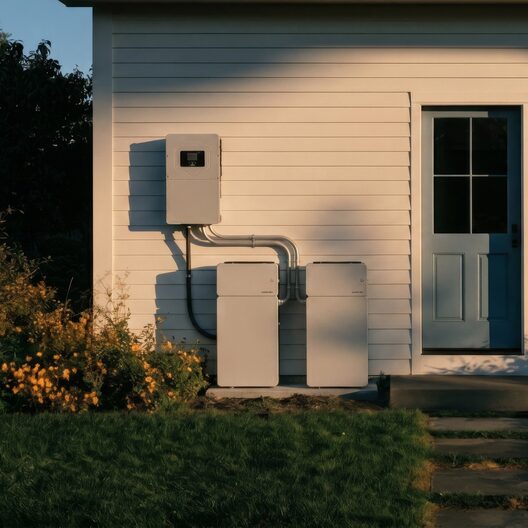
This is the reality of life on a grid under increasing strain. But it doesn’t have to be. A powerful group of homeowners is making and storing their own energy with solar and battery backup. On America’s 250th birthday, they’ve declared their own independence from high bills and blackouts.
Brand Director at Daylight. Sunnyside is Daylight’s guide to energy, the grid, and the weather that moves your bill.