Winter is months away. But what happens to your power bills this January and February is being shaped right now, by a slow-building weather pattern in the Pacific Ocean.
El Niño is coming. NOAA's Climate Prediction Center puts the probability at 82% that it will emerge this summer, and 96% that it will persist through winter 2026-2027.
Historically, El Niño has meant warmer, drier winters across many parts of the United States. For homeowners still recovering from a brutally cold 2025-6 winter, this may sound like a welcome reprieve. But this weather pattern could have a profound impact on your energy costs.
What is El Niño?
El Niño is a periodic warming of sea surface temperatures in the central and eastern tropical Pacific. It sounds abstract, but its effects on weather patterns across North America are well-documented and consistent enough that NOAA tracks it closely and publishes regular forecasts.
The broad El Niño pattern for the continental United States is warmer and drier winters across the northern tier of the country. For the Midwest and much of the Northeast, that typically means milder temperatures and less extreme cold: fewer polar vortex events, less brutal January cold snaps, and generally lower heating demand.
On its face, that sounds like good news for your power bill. And in a normal year, it would be.
However, energy costs in Massachusetts and Illinois are at an abnormal baseline this year, and El Niño's effect on your bill is more complicated than "it'll be warmer, so you'll pay less."
What El Niño typically does to energy costs
When winters are milder, natural gas consumption for heating drops. Massachusetts's electricity grid leans heavily on natural gas; ISO New England depends on gas plants for a significant share of its winter generation. When heating demand drops, it typically means less stress on the system and lower spot prices.
For Illinois, a milder winter means Ameren and ComEd customers run their furnaces less and avoid the most expensive peak demand periods. PJM's grid, which serves northern Illinois, has historically seen price spikes during extreme cold events when demand surges and gas supplies tighten simultaneously.
El Niño, in a traditional context, would modulate both of those risks downward.
But here's what's different in winter 2026-2027: electricity rates in both states are already elevated, independent of weather. Illinois customers are starting this winter from a rate baseline 50 to 90% higher than five years ago, driven by cost increases in the grid. Massachusetts customers are coming off a winter where Eversource's supply rate increased roughly 5% in February 2026, and gas rate increases are pending.
El Niño can reduce weather-driven demand. But it can't undo what's already baked into the rate structure.
The structural piece El Niño won't fix
The electricity cost story in both markets has a cause that has nothing to do with weather. In Illinois, it's the PJM capacity auction, a wholesale power market that cleared at record prices for 2026-2027, driven largely by data center demand. Those prices are locked in. A mild winter reduces how much electricity you use, but the per-unit cost of the electricity you do use stays the same.
In Massachusetts, ISO New England is navigating a grid in transition: old gas plants retiring, new solar and storage coming online, but a grid that still leans heavily on natural gas during winter peaks. A mild El Niño winter eases that pressure. A cold snap, even in an El Niño year, can still send prices spiking if gas supply tightens.
The key point: El Niño is a weather modifier, not a rate modifier. It changes how much energy you need. But your per-unit cost is set by the market, regardless of how cold or warm it gets.
What a strong El Niño winter looks like for Massachusetts and Illinois
Based on historical El Niño patterns and NOAA's current seasonal outlook, here's what homeowners in places like Massachusetts and Illinois can reasonably expect:
Massachusetts: The Northeast tends to see above-normal temperatures during El Niño winters, with fewer extreme cold events. This typically translates to lower heating demand and reduced grid stress during the periods when New England's gas-heavy generation mix is under the most strain. Boston and surrounding areas may see a repeat of the relatively mild winters of 2015-2016, the last strong El Niño period. That was a winter where heating costs came in measurably lower than average.
Illinois: The Midwest signal in El Niño years is generally warmer-than-average across the northern tier, with the strongest warming across the northern Plains extending into the Great Lakes region. Chicago and the surrounding ComEd service territory typically see fewer polar vortex intrusions and reduced demand spikes. The Ameren territory in central Illinois tends to follow a similar pattern.
In both cases, a strong El Niño winter would likely mean a measurable reduction in heating demand and some softening of peak electricity demand relative to a cold or neutral winter. Bills will still be high by historical standards, though a genuine El Niño can take the edge off.
Why you shouldn't wait for the weather to save you
El Niño could make this winter gentler on your bill. But it can't address the underlying dynamics that have made electricity substantially more expensive than it was a few years ago.
The durable question for homeowners: how dependent am I on grid power for my heat and electricity, and what happens to my bill if this winter turns cold anyway?
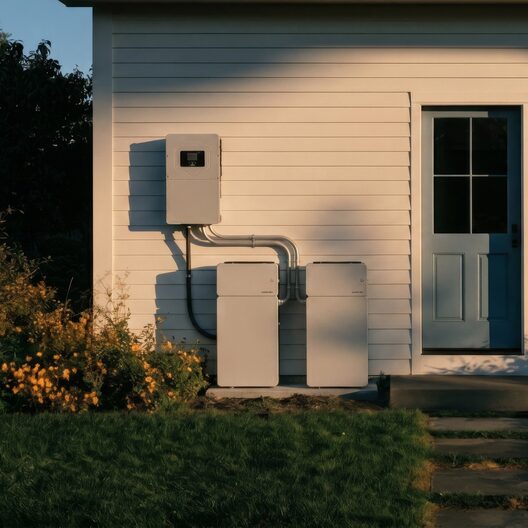
A home with solar panels and battery storage is insulated from both scenarios. On a mild El Niño winter, you still generate your own power and reduce your grid dependence. On a cold snap that strains the grid and drives up spot prices, your battery keeps the lights on and your panels start producing again the moment the sun comes out. Either way, you're not entirely subject to what the grid does.
Systems Architect at Daylight. Sunnyside is Daylight’s guide to energy, the grid, and the weather that moves your bill.