On May 18, 2026, NextEra Energy announced plans to acquire Dominion Energy in a deal worth roughly $67 billion, constituting the largest proposed utility merger in US history. If approved, the combined company would serve approximately 10 million homes and businesses across Florida, Virginia, North Carolina, and South Carolina, under the NextEra Energy name.
NextEra Energy is the world’s largest electric utility by market capitalization, valued at around $193 billion before the deal. Most people outside Florida don’t recognize the name, but it’s the parent company of Florida Power & Light, the state’s dominant electric utility, as well as NextEra Energy Resources, the largest generator of wind and solar power in the country. The business spans 49 states.
Dominion Energy is a Richmond, Virginia-based utility serving roughly 3.6 million electric customers in Virginia, North Carolina, and South Carolina. It’s one of the most consequential power companies in the country right now because it sits at the center of the world’s largest concentration of data centers.
Why is this merger happening?
The honest answer is: data centers.
Virginia houses the largest cluster of data centers on earth. Dominion describes it as more capacity than the next four largest global clusters combined. As of March 2026, the company had contracted nearly 51 gigawatts of data center capacity from tenants that include Alphabet, Amazon, and Microsoft. That number was still growing.
Meeting that demand requires enormous infrastructure investment: new transmission lines, generation capacity, substations, interconnections. No utility can finance that buildout cheaply on its own. Pairing with NextEra, which has deep experience financing massive capital projects and a strong balance sheet, is one answer to that constraint.
Put another way: the AI boom is driving a surge in electricity demand so significant that individual utilities can’t keep up alone. This merger is an attempt to build the scale to handle it.
Who’s directly affected?
If you’re a Dominion customer in Virginia, North Carolina, or South Carolina, this deal is about you. Roughly 3.6 million electric customers fall into that group. Florida Power & Light customers in Florida will remain under the same parent company, NextEra. Nothing changes structurally for them.
If you’re outside those markets, in Massachusetts, Illinois, or anywhere else not served by these two companies, this deal has no direct impact on your electricity bill today. Your rates are set by your own utility and state regulators. But there are indirect implications that you should be aware of now.
What it could mean for bills
A homeowner’s electricity bill has two main components: the supply charge (what you pay for the actual electricity) and the delivery charge (what you pay for the lines, substations, and maintenance that gets power to your house). The delivery side is where a larger, better-capitalized utility can, in theory, make a real difference.
NextEra and Dominion argue exactly that. A combined company can finance grid infrastructure at lower cost, buy equipment in bulk, and run maintenance operations more efficiently. They’ve also committed to $2.25 billion in customer bill credits for Dominion customers over the first two years after closing.
Whether those efficiency gains materialize in lower bills over the long run is genuinely uncertain. Utility economics are complicated, and delivery charges are set through negotiations between the company and state regulators that can take years to resolve. The combined company will also carry a massive infrastructure buildout to serve Dominion’s data center load, which is a significant ongoing cost.
When does the merger actually happen?
The companies estimate closing in 12 to 18 months, putting the earliest possible date around late 2027. Before then, the deal needs approval from shareholders at both companies, the Federal Energy Regulatory Commission, the Nuclear Regulatory Commission (Dominion operates nuclear plants), antitrust authorities, and state utility commissions in Virginia, North Carolina, and South Carolina.
That’s a long path to closing. NextEra has proposed acquiring four other regulated utilities in the past, including Duke Energy, Hawaiian Electric, Oncor in Texas, and Santee Cooper in South Carolina, and none of those deals succeeded.
Is this a one-off, or the start of something bigger?
If this deal closes, it will almost certainly not be the last.
Between late 2024 and late 2025, US utility deal activity totaled roughly $142 billion across 35 transactions. Other notable deals include Constellation’s $29 billion acquisition of Calpine and NRG Energy’s $12.5 billion purchase of LS Power. Analysts widely expect the pace to continue.
Electricity demand is projected to grow faster than at any point in decades, driven by data centers, electrification, and industrial demand. Smaller utilities cannot finance the necessary buildout on their own. The largest, best-capitalized players are acquiring their way to scale.
What any homeowner should take from this
If you’re outside Dominion or FPL territory, this specific deal doesn’t change your bill. But the trend behind it matters.
The US electricity system is being reorganized around the electricity demand that AI and data centers generate. That demand raises wholesale costs, which utilities pass on to residential customers.
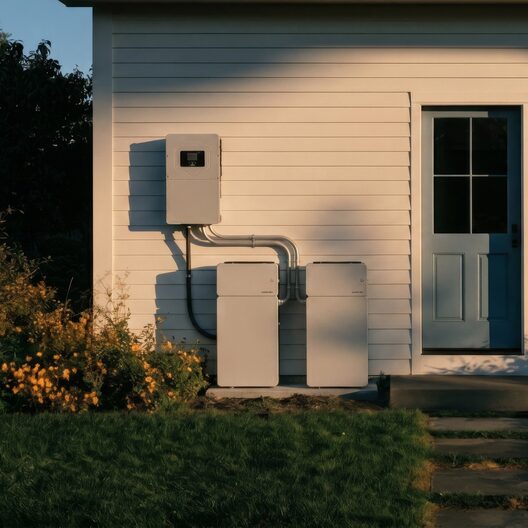
Homeowners who reduce their dependence on their local utility are better positioned to weather this. Generating your own power through solar, and having the ability to store it, means you’re less exposed to rate decisions.
The story we’re seeing now with utilities and data centers will continue to play out for years to come. Opting for solar and battery with a company like Daylight lets you put the power in your hands today.
Brand Director at Daylight. Sunnyside is Daylight’s guide to energy, the grid, and the weather that moves your bill.