From September 25 to 27, a powerful nor’easter swept across the Northeast.
AccuWeather reported that more than 200,000 customers across seven states lost power over the course of the storm. Gusts reached 74 mph at Surf City on New Jersey’s Long Beach Island, and the water level at Atlantic City peaked 3+ feet above the predicted tide, its highest since Superstorm Sandy.
Connecticut’s numbers show how restoration unfolds after a major storm. By 3 p.m. Sunday, September 27, Eversource had restored power to more than 146,000 customers, with about 17,000 still out, according to T&D World.
By 4 p.m. Monday, the Greenwich Free Press reported that more than 185,000 customers had been restored in just under three days. About 1,300 were still without power, many because their outages required more complex repairs.
In New Jersey, PSE&G reported 51,727 customers restored and 939 still without power as of 7:26 a.m. Sunday, with roughly 2,500 line workers, tree crews, and surveyors on the job.
Not all outages are created equal
Big outages often clear quickly because one repair can restore power to thousands of customers at once.
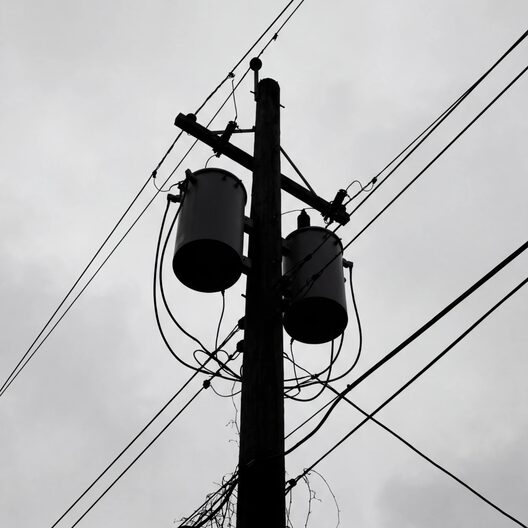
But the remaining outages tend to be smaller and more complicated. A damaged pole, transformer, or stretch of line might serve only a few homes but still require a full repair crew. Eversource noted that as the larger outages were resolved, the remaining work became more complex and restored power to fewer customers at a time.
The scale of the damage was significant. By Monday afternoon, Eversource crews in Connecticut had cleared more than 450 blocked roads and replaced or repaired more than 300 poles, more than 60 transformers, and more than 50 miles of electric line.
The weather can slow repairs too. PSE&G noted that crews could not safely use aerial equipment such as bucket trucks in high winds. Some work had to wait until conditions improved.
Eversource said it prioritized restoring power to schools before Monday classes.
What three days without power does to a house
Restoration in Connecticut ran close to three days from the start of the storm. A house without power that long loses five things:
- Food. A refrigerator stays cold for only so long with the door closed.
- Basement protection. A sump pump stops, and coastal flooding is when basements take on water.
- Heat. Gas and oil furnaces need electricity for their blowers and controls.
- Internet and phones. The router goes down and chargers stop working.
- Medical equipment. A CPAP machine or other powered device needs electricity overnight.
A home battery is built to cover that list.
What a home battery does during a storm outage
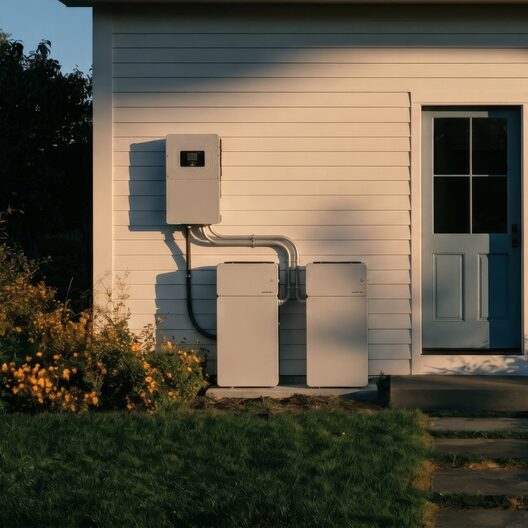
A home battery stores electricity from the grid or from solar panels and makes that power available when the grid goes down.
The switch happens automatically, typically in milliseconds. Depending on how the system is configured, that can keep lights on, the refrigerator cold, the internet running, and medical equipment powered without the noise, fuel, or exhaust of a generator.
How long the battery lasts depends on its size and what you ask it to power. A refrigerator, a few lights, internet, and phone chargers use far less energy than central air conditioning, an electric range, or other large loads.
Solar can extend that backup window. If the system is designed to recharge during an outage, rooftop panels can replenish the battery when the sun is out. Cloud cover reduces production, so a multi-day storm still requires careful use of stored power. Without solar, a depleted battery has to wait for the grid to return.
Battery or generator for storm season?
A standby generator burns natural gas, propane, or gasoline and can run a home for as long as fuel remains available. A battery requires no fuel, makes no engine noise, and switches on automatically.
For a deeper comparison, see our guide to battery backup versus a gas generator.
Questions to ask before the next storm
Whether you are comparing installers or considering a Daylight system, these questions cover most of what matters for backup:
- Which circuits does the battery back up?
- How long will it run the loads you care about, such as the refrigerator, internet, lights, and medical equipment?
- Can it recharge from solar while the grid is down?
- How quickly does it switch over during an outage?
- Who monitors and maintains the system?
Where Daylight fits
Daylight provides solar and battery backup with zero upfront cost, and a battery comes standard with every installation.
How long a home stays powered during an outage depends on the size of the system, the loads being used, and conditions during the event. No battery can promise unlimited backup through every storm.
What it can do is give a household its own source of power while the grid is being repaired.
Systems Architect at Daylight. Sunnyside is Daylight’s guide to energy, the grid, and the weather that moves your bill.