At one point or another, many people powering their homes with solar have a surprising experience.
Your solar system is producing more energy than your house needs. Perhaps there’s even a backup battery connected to the system, so excess energy is being stored for the future. You’re living in a state of personal energy abundance.
And yet, at the end of the month, you still get a bill from your utility.
How is that possible? Isn’t your house “off the grid” now?
The short answer is no. Modern residential solar is connected to the grid. And for many homeowners, that actually makes solar far more convenient and valuable.
The power of a grid-tied system
When an installer puts solar on your home, they almost certainly wire it as what's called a grid-tied system. Your panels charge your battery and power your home directly. But your home stays connected to the utility grid.
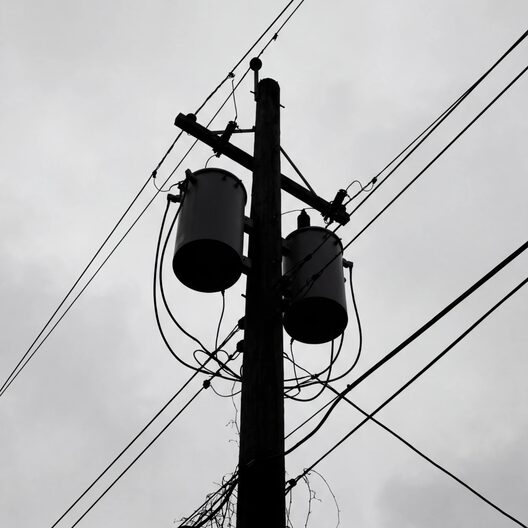
That connection works in both directions. When your system produces more power than your home is using, the excess flows out to the grid, and your utility credits you for it through a policy called net metering. When your system doesn't produce enough to meet your energy needs, your home draws power from the grid.
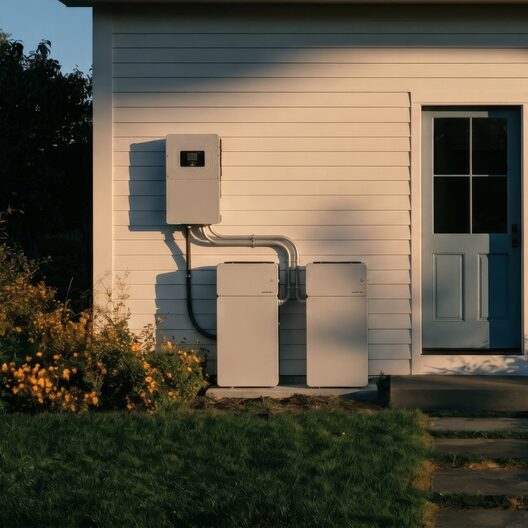
If your house has a battery installed as well, the battery handles the overlap. It stores excess production during the day so you can run on it in the evening and overnight. A well-sized battery cuts down the hours when you're pulling from the grid. But the grid is still there, and your home is still connected to it.
That's the design. And, for the vast majority of homeowners, it’s the right design.
Why grid-tied, and not off-grid
The alternative is a true off-grid system. In that setup, your solar and battery combination has to handle 100% of your home's energy demand on its own, including during worst-case scenarios.
For a home in Massachusetts or Illinois, worst-case looks something like this: a stretch of cloudy days in January, when production is low and heating demand is at its peak. To cover that on your own, without the grid as a backstop, you need a system roughly two to three times the size of a typical grid-tied installation. Many off-grid homeowners also keep a backup generator for exactly those situations.
That setup makes sense in places where grid connection is expensive or logistically difficult, like remote rural properties. But for homeowners in established utility territories, it’s an unnecessary burden.
Grid-tied systems are sized to cover as much of your typical annual consumption as possible, and use the grid as a backstop on your worst days. The economics work. And the system works. Keeping the grid as a reliable energy backstop can be incredibly valuable for you.
Understanding your bill
Even with a well-performing solar-plus-battery system, your utility bill has two components that matter for you.
The first component is the supply charge, which is tied to the amount of energy you draw from the grid. When your panels are producing and your battery has capacity, you're not drawing much from the grid, and your supply charge is low. In spring and summer when days are long and production is high, a well-sized system can push the supply charge close to nothing.
The second component is the delivery charge, which includes the fees charged to every customer regardless of their power consumption. These cover the network delivering power to your home: poles and wires, substations, meters, and the crews maintaining it all. These fees don’t budge, no matter how much power your home makes.
What to expect, month to month
In spring and summer, solar production is high and days are long. Your battery covers evenings with power stored during the day. Your supply charge falls sharply and, in these months, net metering credits can offset a meaningful portion of your delivery charge.
Winter looks different. Shorter days mean less production. Heating demand is high. The supply charge rises, and the total bill rises with them. So your bill is typically higher in December than in June.
But across the year, the total is substantially lower than it would have been without solar.
Two ways to look at the connection
For some homeowners, total energy independence is the real goal. In the right circumstances, going fully off the grid is a genuine option.
But for homeowners in established utility territories, the grid connection is usually worth it. When your system produces more than your home needs and the excess flows back into the grid, that power becomes part of the shared supply. Neighbors who can't install solar draw from it. Apartment buildings draw from it. It goes to whoever needs it.
Distributed generation makes the whole grid more resilient. You're not just a consumer who generates some of their own power. You're a contributor to a shared infrastructure that serves people who have no other option.
The utility bill is part of that relationship. And the relationship comes with major benefits: lower bills, backstop energy when you need it, and the ability to put power back into your community.
Solar and battery backup changes your relationship with the grid. It doesn't end it. And for most homeowners, that's the better outcome.
Brand Director at Daylight. Sunnyside is Daylight’s guide to energy, the grid, and the weather that moves your bill.