The average American household pays somewhere between $150 and $165 a month for electricity. If your bill is landing around $200 a month or more, you're paying somewhere between 25 and 35% more than average.
But here’s the thing: a high bill doesn’t mean you’re necessarily using more power than the average homeowner.
Usage habits matter, but a $200 bill is rarely the result of leaving a few extra lights on. It's far more often a function of where you live, what your utility charges per kilowatt-hour, and how that rate has changed over the past few years.
Why your bill's gone up
Rates are rising broadly, and in a growing number of places, a second wave of demand is stacking on top of the first.
The average U.S. residential electricity rate climbed to 18.83 cents per kilowatt-hour in April 2026, up more than 7% from a year earlier. Power rates have been outpacing inflation for several years running, driven by grid infrastructure investment, storm-damage repair, and the rising cost of the fuel that powers much of the grid.
The second trend is data-center demand, and it's making the first problem worse in a growing number of regions.
For PJM, the grid operator covering a large stretch of the mid-Atlantic and Midwest, an independent analysis attributed 63% of a recent surge in wholesale capacity costs to data center and AI load growth, a total of $9.3 billion in added costs this delivery year alone. That's already showing up as $16 to $21 a month on the average residential bill in that region, and it's projected to reach $70 a month by 2028 if the trend holds.
Put these two forces together and a $200 bill starts to make sense even for a household that hasn't changed a single habit.
What you can do about it
From here, you've really got two paths.
The first is to keep paying whatever your utility charges. That rate isn't something you negotiate. It's set through a regulatory process, shaped by the same cost pressures described above, and it has moved in one direction for years. Staying with your utility means staying exposed to whatever comes next, whether that's the next capacity auction, the next storm-hardening project, or the next rate case your utility files with state regulators.
The second is to change the agreement entirely.
A power purchase agreement, or PPA, works differently than a standard utility bill. Instead of buying electricity from your utility, you agree to buy the power your own energy system produces. Agreements typically last 25 years, and with companies like Daylight you can lock in a rate for the duration of the agreement.
That means that while utility rates continue climbing, your PPA rate stays the same for decades.
Where Daylight fits in
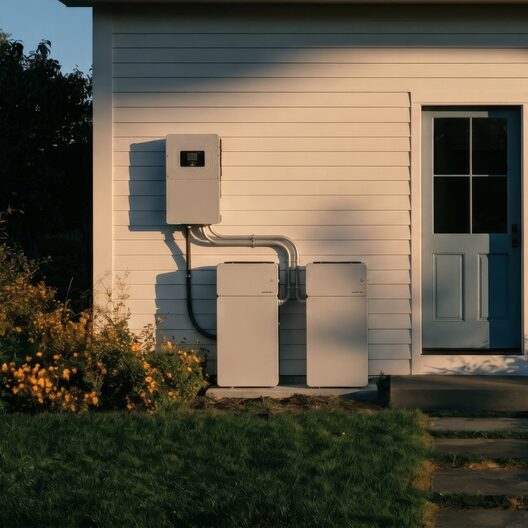
Daylight installs tier-1 solar panels and 24/7 battery backup at zero dollars upfront, and the battery is included standard, with no monthly adders or additional cost.
The rate you pay is locked for the life of the agreement, it doesn't carry an annual increase the way a lot of contracts do, so the $200 a month you're paying today doesn't quietly become $220 next year and $240 the year after that.
The bottom line
Utility rates change all the time, and for the last several years they’ve only gone up. A locked-rate solar and battery agreement takes you out of rate climb.
You can keep paying a rate that climbs every year, or lock in a flat rate with backup power included. That’s the power of a PPA with solar and battery from Daylight.
Brand Director at Daylight. Sunnyside is Daylight’s guide to energy, the grid, and the weather that moves your bill.